
Multi-agent products — in design
Surfaces for life replay, scoring, and generative worlds. MindLog and Pulse are the first two, both in early build.
Sydney · Applied AI
What runs today, and what has been measured on NVIDIA GPUs.
The public site, the CMS, and the API are running now: Nuxt 4, Vue 3, ThinkPHP 8, MySQL 8.4. NVIDIA GPU inference has been measured on AWS. Public MindLog and Pulse demos still call a hosted API. This page keeps those facts apart.
AI Stack
Surfaces for life replay, scoring, and generative worlds. MindLog and Pulse are the first two, both in early build.
Roles, handoffs, memory, and protocols designed in-house — not left to a single chat turn. This is the current build focus.
Measured on AWS g4dn.xlarge in Sydney (NVIDIA Tesla T4, 16GB) with CUDA and vLLM. Model: Qwen2.5-7B-Instruct-AWQ. On-demand, not a 24/7 inference cluster. No private training cluster, now or planned. Larger G5/G6 instances when Sydney capacity allows.
Serving path measured for the MVP: CUDA with vLLM 0.27.1. TensorRT and Triton are not in use. NVIDIA NIM and NeMo are not in use.
Embeddings and durable state to keep generation anchored in what just happened. Session and content state today sit on MySQL.
Planning, tool use, handoffs, and recovery for long-running work. This is what is being written right now.
Automated Playwright smoke suites already gate the site, CMS, and API on every change. Product scoring, replay, and safety suites land with the runtime.
On T4 with vLLM: first token ~34 ms; ~35 tokens/s on a single stream; ~139 tokens/s at batch 4. Public demos still use a hosted API.
System Architecture
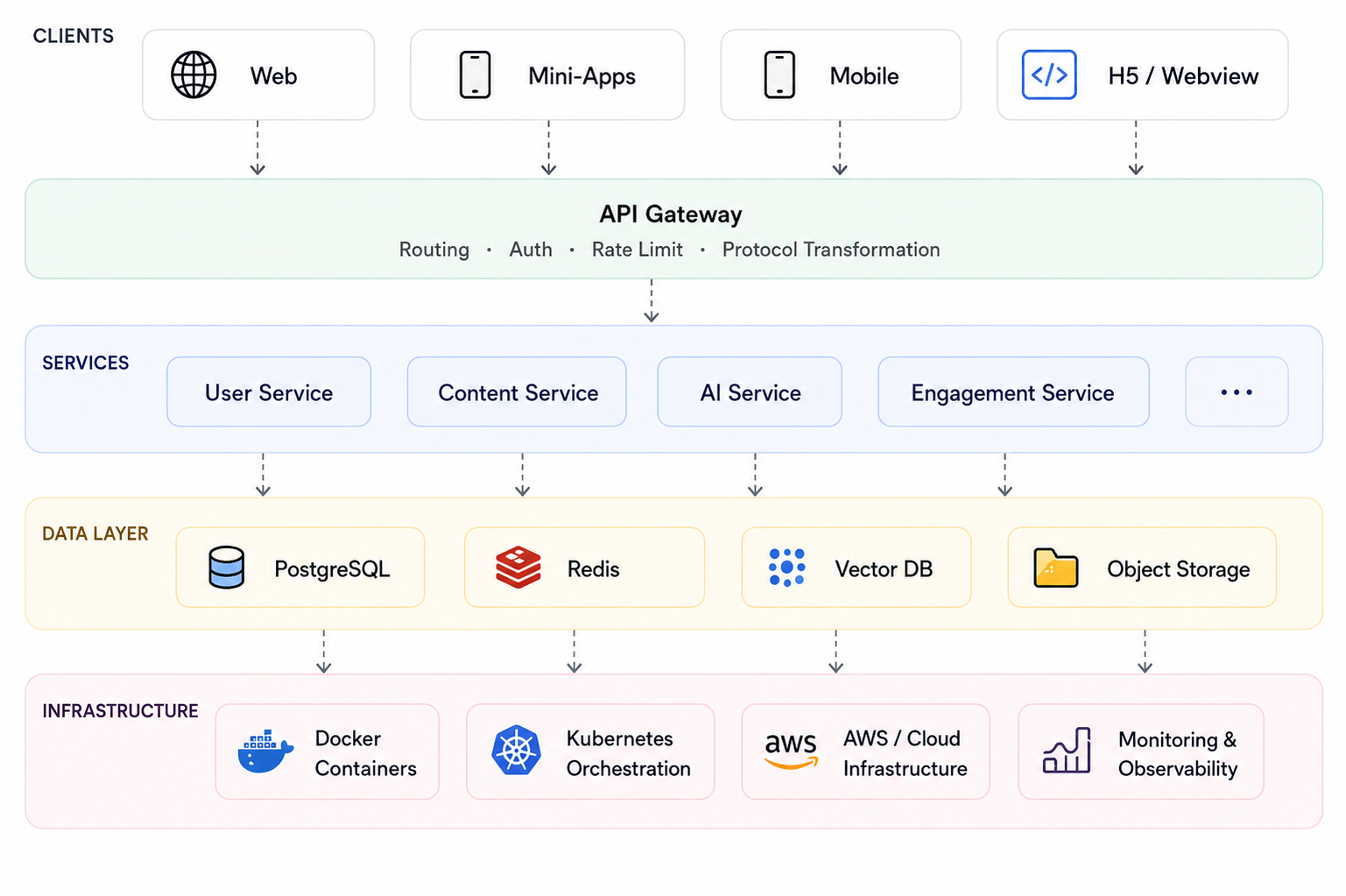
Core Capabilities
How work is split, how agents collaborate, and how state is remembered — designed and built in-house. This is the current build.
Batching, KV-cache reuse, and vLLM keep T4 cost inside a product budget. We do not sell or resell GPU hours.
Measured on T4 with vLLM: first token ~34 ms. Public product demos still stream from a hosted API.
Automated smoke suites already gate the public site, CMS, and API. Product scoring, replay, and safety gates arrive with the runtime.
Guardrails, review paths, and constraints designed into the runtime as it is built.
Capture and curate production traces once products serve real sessions, then feed them back into the next orchestration pass.